
If you’ve ever wondered how much does a small online store cost, the short answer is: from a few hundred euros for a basic version, up to a few thousand for something more complete. A small online store is a digital sales platform with a limited catalog, usually under 100 products, built on a standard solution like WooCommerce or Shopify. The actual amount depends on what you choose: platform and design, as well as features. Who actually does the work matters a lot.
Key Takeaways
- A small online store on WooCommerce with card payments and shipping costs from approximately €700 at launch, plus €100–400 per year for domain and hosting.
- SaaS platforms like Shopify have a monthly subscription of approximately $29, without major launch costs, but with sales commissions.
- Hidden costs, such as bank fees and courier charges, can exceed the platform cost in the first year. Marketing adds a significant additional amount.
- A realistic budget for the first year of a small store, including basic promotion, ranges between €1,500 and €3,000.
- Neogenio creates a free WordPress website with AI, with pages and text, plus images matching your company’s brand and colors, at websites.neogenio.ai.
By the end of this guide, you’ll know exactly what budget to prepare, what the common financial pitfalls are, and how you can start efficiently without spending more than necessary.
Available platforms and their basic costs
Choosing the platform is the first financial decision you make. There are two major categories: self-hosted platforms, like WooCommerce on WordPress, and SaaS platforms, like Shopify. Each has a completely different cost structure.
WooCommerce is free as software, but you pay for hosting and domain. Optionally, you add premium themes or plugins. Shopify provides everything for a monthly subscription. Shopify estimates that a simple store can cost approximately $29 per month on the basic plan, without major startup costs.
There are also solutions like PrestaShop or OpenCart, but for a small store their complexity usually doesn’t justify the extra effort. WooCommerce and Shopify cover most of the real needs of a small store.
| Platform | Initial Cost | Monthly Cost | Sales Commission |
|---|---|---|---|
| WooCommerce | €0 (software) | €5–30 (hosting) | 0% (platform) |
| Shopify Basic | €0 | ~$29 | 2% (without Shopify Payments) |
| Custom store | €2,500 + | variable | 0% |
The practical conclusion: if you want maximum control and low monthly costs, WooCommerce is the logical choice. If you prefer not to deal with server and security, Shopify is easier to manage day to day. For a detailed comparison between the two platforms, check our guide on WooCommerce vs Shopify for a store in Romania.
Launch cost: what you pay once
The launch cost includes everything you pay before the store goes live: platform setup and design, as well as payment and shipping functionality installation. This varies greatly depending on who does the work and how complex the store is.
A small store on WooCommerce, with up to approximately 100 products, card payments and courier delivery, starts from €700, according to data published by online store creation agencies. A larger catalog, with advanced filtering and courier integration, starts from €1,100. A custom or B2B project starts from €2,500.
If you choose to build the store yourself on a SaaS platform, the launch cost can be almost zero. But you’ll invest time, and time has value. A wrong setup from the start can cost more later.
There are agencies that offer online stores for €300–500. Usually, those prices reflect minimal setup, without real design customization and without serious testing. You pay less now, but risk paying more for rework later.
The domain is another launch expense. A .ro domain costs around 30–50 lei per year, and a .com starts from approximately $10–15 per year. These amounts are small, but must be included in the calculation.
Recurring costs: what you pay every year
Beyond launch, an online store has fixed costs that recur monthly or annually. If you don’t include them in your budget from the start, they can become an unpleasant surprise after a few months.
Hosting is the most important recurring cost for a WooCommerce store. Quality hosting for a small store costs between 5 and 30 euros per month, depending on performance and provider. Cheap hosting can slow down the store, and a slow store loses customers.
The domain renews annually. If you use Shopify, you pay the monthly subscription directly to the platform, which also includes hosting. You no longer have separate hosting costs, but the subscription is mandatory even if you don’t sell anything in a month.
Some premium themes and plugins have annual licenses. A payment plugin or invoicing system can cost between 20 and 100 euros per year. A shipping module adds a similar amount. Added up, these costs can exceed 200–300 euros annually without you realizing it.
Technical maintenance is optional but recommended. Security updates and backups require time or money. The same goes for fixing errors. Agencies offer maintenance packages starting from approximately 30 euros per month.
Hidden costs that many ignore
The real question is not just how much the platform costs, but how much the entire chain around it costs. Bank fees and courier charges are often forgotten in the initial calculation. Operating costs add another layer of expenses.
Card payment processing comes with a percentage commission. Depending on the processor chosen, the commission can be between 0.7% and 3% of the transaction value, plus a fixed fee per payment. At a sales volume of €5,000 per month, commissions can reach €100–150 monthly.
Courier delivery has variable costs. A small package costs around 35–55 lei, but if you have frequent returns, costs double quickly. You need to decide whether to absorb the shipping cost or transfer it to the customer, and both options affect the conversion rate.
Electronic cash registers or integration with an invoicing system are legally required in many situations. These tools also cost: from software subscriptions to authorization fees.
Product photos are constantly underestimated. Poor quality images reduce sales more than any other technical problem. A professional photo set for 50 products can cost between 200 and 800 euros, depending on the photographer and product complexity.
How much does a small online store cost in the first year
If you add up all the components, how much does a small online store cost in reality, over the first full year of operation? The answer depends on the chosen scenario, but there are some clear benchmark figures.
Minimum scenario, for niche testing: SaaS platform at approximately $29 per month, domain, a few hours of self-configuration. Total launch: under €200. Total year: €400–600. Suitable if you just want to validate an idea, without high volume expectations.
Medium scenario, for a serious start: WooCommerce store created by an agency, with custom design and integrated payments. Shipping is configured from the start. Launch: €700–1,100. Hosting and domain per year: €100–400. Photos and initial content: €200–500. Total first year: €1,200–2,200, without marketing.
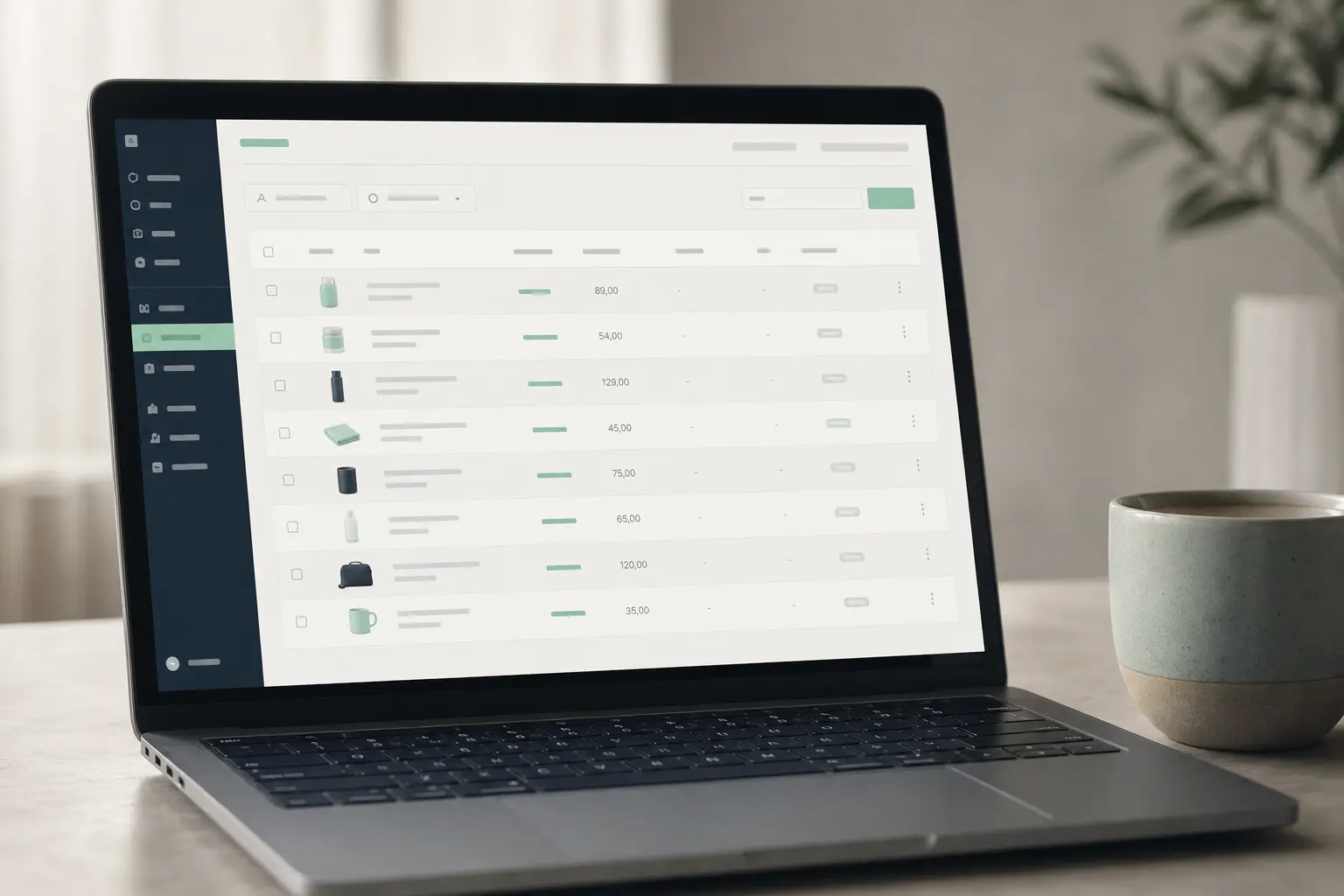
Complete scenario, with promotion included: all of the above, plus a monthly budget of €200–500 for Google or Meta ads. Total first year: €3,500–6,000. This is the budget for those who want visible results in the first months.
If you’re just starting and want to reduce the website launch cost, Neogenio creates a free WordPress website with AI, with pages and text, plus images matching your company’s brand and colors, at websites.neogenio.ai. It’s a solid starting point, without initial investment in design.
Design and content: where you can save and where you can’t
Design and content are the components where most beginner entrepreneurs try to cut costs. Sometimes it makes sense, other times it’s a costly mistake.
For design, you can save by using a purchased premium theme, instead of paying for 100% custom design. A good theme costs between 50 and 100 euros and looks professional if configured correctly. You don’t need to spend 1,000 euros on graphic design if it’s your first launch.
For product photos and text, you can’t cut costs without consequences. A product with a poor quality photo and a description copied from elsewhere doesn’t sell well, regardless of how good the product itself is. Product texts also influence your position in Google.
Editorial content, meaning blog articles and optimized category pages, is often ignored at launch. But it’s exactly what brings organic traffic in the long term, without advertising costs. An AI SEO engine can research keywords and write optimized articles in your brand’s voice. It publishes directly to WordPress, and you approve each publication.
A store without content is like a physical store without a window display. People don’t know what they’ll find inside and don’t enter. Investment in quality content brings more lasting results than any paid advertising budget.
Promotion and marketing for a new store
Launching the store is only half the equation. Without traffic, there are no sales. And traffic costs either money or time. Often it costs both.
Organic SEO is the most efficient channel in the long term, but it requires patience. Results appear after a few months, not immediately. A starting budget for SEO managed by an agency starts from €500 per month, but you can take the first steps yourself with an AI tool that writes and publishes optimized articles for you.
Google Ads bring immediate traffic, but cost continuously. A realistic budget for a small store starts from €300 per month, but under €500 results are limited. Meta Ads, meaning Facebook and Instagram, can work with smaller budgets if the product has visual potential and the audience is well defined.
Email marketing is the cheapest channel of all. If you have an active database, a well-written campaign can generate sales at a cost of under €20–30 per month for the sending platform. The problem is that at launch you don’t have that database yet.
Social media can be managed internally, without agency costs, if you have time and consistency. The real cost is actually the time invested, which could be used for something else in the business. Honestly decide what you can manage yourself and what you outsource.
How to reduce costs without sacrificing quality
Starting a small online store with a limited budget is possible if you know where to cut and where not to. There are some concrete decisions that make the difference between a sustainable project and one that consumes resources without results.
Start with a small catalog. You don’t need 500 products at launch. Start with 20–30 well-presented products, with decent photos and clearly written descriptions. It’s easier to manage and easier to finance.
Choose a platform suitable for the stage you’re at. If you’re not certain the business idea works, don’t invest €1,500 in a custom store. Test on a SaaS platform or on WordPress with a premium theme and invest more only after you have your first real sales.
Automate where you can. A chatbot or AI agent integrated into the store can answer frequently asked questions and manage order tracking. This reduces the volume of manual support. It means less time lost on repetitive tasks and more time for what really matters.
Don’t ignore the free SEO audit. Before spending on ads, check if your store is found correctly by Google. The first SEO and GEO audit is free at seo.neogenio.ai, where you can quickly find out what Google sees on your site and how you’re indexed in AI search engines.
Prioritize costs that generate revenue over those that just maintain. Good photos and clear texts sell. A logo redesigned for the fifth time doesn’t sell. Be disciplined about where you put money in the first six months.
Frequently Asked Questions
How much does a small online store cost if I do it myself?
If you configure it yourself on a platform like Shopify or WooCommerce, you can start with €50–200 for domain and theme, plus the first year of hosting. You don’t pay for design or creation, but you invest considerable time. The final quality depends on your technical skills.
Which platform is cheaper: WooCommerce or Shopify?
In the short term, Shopify is simpler and more predictable in terms of monthly cost. In the long term, WooCommerce can be cheaper if you have a high sales volume, because you don’t pay commission on transactions at the platform level. The choice depends on volume and your preference for technical control.
Do I need a marketing budget from launch?
Yes, a marketing budget is essential if you want sales in the first months. SEO brings results only after a few months, so without paid ads or an existing audience channel, the store can sit without visitors at the beginning. A realistic minimum budget is €200–300 per month for ads.
What costs appear after the store launches?
The main recurring costs are: monthly hosting or platform subscription, annual domain renewal, and plugin or theme licenses. To these are added payment processing commissions. Optionally, you can also add technical maintenance. Added up, these can represent €100–500 per year, without marketing.
Can I add new features after the store is live?
Yes, both WooCommerce and Shopify allow extending functionality at any time. You can add upsell modules and advanced filters. Integrations with invoicing or courier systems are also possible. Each addition has a separate cost, either as a purchased plugin or as development work.
If you’re ready to take the first step, create your free WordPress website with AI in a few minutes at websites.neogenio.ai and start with the right infrastructure from day one.
Neogenio AI
The Neogenio blog: practical guides on SEO and GEO AI, web design, eCommerce, AI automation and SaaS apps, for businesses that want to grow online.
All articles by this author →
 Talk to our team on WhatsApp