The landscape of online search is changing faster than anyone imagined just a few years ago. How to optimize your website for Google and AI in 2027 is a question every website owner needs to answer now, not later. Optimizing a website for Google and AI in 2027 is the process of adapting your content and technical structure so that it’s understood by both traditional search engines and generative artificial intelligence systems. Authority is added to this, another essential element of the process. According to data analyzed by BBC Future, approximately 60% of Google searches today end without any click on an external link, making visibility in AI responses just as important as classic positions in organic results.
Key Takeaways
- Optimization for Google and AI in 2027 combines technical SEO with Generative Engine Optimization (GEO), two strategies that can no longer be separated.
- Human content, with demonstrable expertise and authentic perspective, is the factor that differentiates high-traffic sites from stagnant ones.
- Structured data and schema markup help both search engines and AI systems understand and cite your site’s content.
- Your website’s visibility in 2027 is measured in search engines and AI responses. It’s also measured in maps and digital assistants, not just Google positions.
- Your first free SEO and GEO audit for visibility in Google and AI engines is available at seo.neogenio.ai.
By working through this guide, you’ll be able to implement a complete strategy that brings you visibility in both Google and responses generated by AI systems like ChatGPT or Gemini. This works regardless of your niche.
SEO vs. GEO: what each means and why both matter
Traditional SEO and Generative Engine Optimization (GEO) are two complementary approaches, not competing strategies. SEO ensures that a website is technically sound and well-structured. Easy indexing by Google depends on these elements. GEO ensures that the same content can be interpreted and cited by AI systems when generating responses for users.
The practical difference is significant. A site optimized only for SEO might appear in the top Google results but be completely ignored by ChatGPT or Google AI Overviews. A site optimized only for GEO might be mentioned in AI responses but receive no direct organic traffic.
Therefore, the two strategies work together. SEO is the foundation, and GEO is the bridge to visibility in AI engines. By 2027, according to predictions from Digital Parc, these two approaches will be completely integrated: no serious business will choose one at the expense of the other.
What is GEO and how does it work in practice
GEO means optimizing content so that generative AI systems can understand, process, and use it in their responses. This involves clear and structured language, plus explicit definitions of concepts. Direct answers to frequently asked questions complete this approach.
An AI system doesn’t “read” a site like a human user does. It looks for clear structures and verifiable statements. Information presented in standalone sentences, that is, phrases that make sense even without the context of the surrounding paragraph, are the easiest to process. The easier your content is to “extract” by an AI engine, the higher your chances of being cited in generated responses.
Why businesses can’t ignore GEO anymore
Data shows that Google AI Overviews reduce click-through rates by 30% to 70%, depending on the type of query. This means a site that isn’t optimized for GEO loses visibility even when it ranks on the first page of Google.
The solution isn’t to abandon SEO, but to extend it with GEO principles. Structured content and demonstrable authority are essential. Direct answers to user questions complete the elements that bring you visibility in both ecosystems.
Human content as a competitive advantage in the AI era
The biggest paradox of the moment is this: the more automatically generated content floods the internet, the more valuable content with authentic human perspective becomes. Sites that gain traffic in 2027 aren’t those that publish more, but those that publish better.
Demonstrable expertise in content doesn’t mean adding a paragraph saying “I have 10 years of experience.” It means including concrete observations and examples from practice. Opinions backed by reasoning that an AI system can’t generate from nothing make the difference. This is the distinction between content that gets read and content that gets indexed and forgotten.
What makes human content different from automatically generated content
Human content has its own perspective. It includes specific details from a real context, not generic phrasing. An article describing a process from direct experience, mentioning failures or intermediate adjustments, conveys a signal of authenticity that Google recognizes through user behavior signals.
Time spent on page and bounce rate are indicators that indirectly reflect content quality. The number of pages visited afterward provides additional information. Flat text, without opinion and without detail, makes readers leave quickly, and that negatively affects search positions.
How to integrate expertise into content credibly
Expertise shouldn’t be declared, but demonstrated. A few concrete methods: include real data and verifiable sources, then describe the process behind a decision. Show variations you’ve tested and the conclusion you reached. These elements are hard to fake and hard for quality algorithms to ignore.
Neogenio’s AI SEO and GEO engine researches keywords and writes optimized articles in your brand voice. It publishes them to WordPress, and you approve each publication. This workflow combines AI efficiency with human oversight, exactly the kind of balance Google rewards in 2027.
Structured data and schema markup for AI engines
Structured data is the code behind content that explicitly tells a search engine or AI system what type of information a page presents. Without it, an AI engine has to guess. With it, interpretation becomes direct and precise.
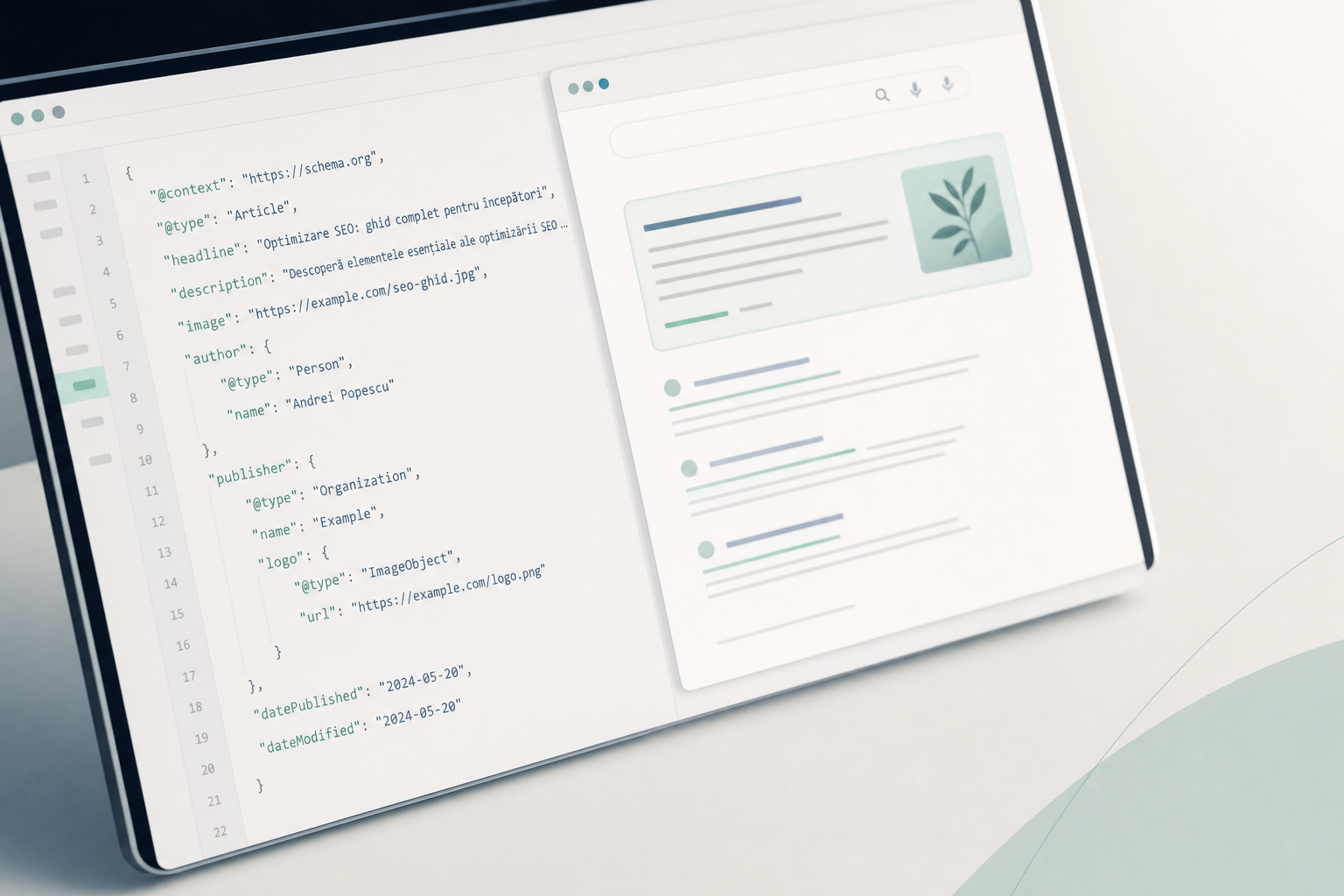
Schema markup, implemented in the JSON-LD format recommended by Google, can mark articles and products. Reviews and frequently asked questions are also easy to mark, as are events. The more precisely a page is marked, the higher the probability it will be cited in AI Overviews or ChatGPT responses.
Types of schema markup relevant for 2027
The FAQPage schema type is among the most effective for AI visibility. When you explicitly mark question and answer sections, an AI system can extract the exact answer to a query without processing the entire page.
Article and BlogPosting schemas help transmit information about the author and publication date. The article’s subject is also easier to identify. The HowTo schema is ideal for step-by-step guide content, the format preferred by users looking for concrete instructions.
How to verify correct implementation
Google Search Console provides reports on structured data detected on your site. The structured data testing tool from Google Search Central allows you to verify each page before publishing. Markup errors are common and significantly reduce schema effectiveness.
Correct implementation doesn’t guarantee appearance in rich results or AI Overviews, but its absence guarantees you’ll miss these opportunities. It’s a technical minimum any serious site needs to reach by 2027.
How to optimize your website for Google and AI: essential technical steps
The foundation of any visibility strategy is the technical health of your site. How to optimize your website for Google and AI in 2027 starts with a systematic check of basic technical elements, before any investment in content.
A slow site, with duplicate pages or indexing errors won’t perform well in either Google or AI systems, no matter how good the content is. Technical performance is a necessary condition, not a sufficient one.
Loading speed and Core Web Vitals
Core Web Vitals are the metrics by which Google measures user experience: Largest Contentful Paint (LCP) and Interaction to Next Paint (INP). Cumulative Layout Shift (CLS) completes the set of measurements. A poor score on any of them directly affects search positions.
Image optimization and using a CDN have a direct impact on these metrics. Reducing unnecessary JavaScript and efficient caching contribute further. These are relatively accessible technical interventions, but frequently ignored by small website owners.
Correct indexing and URL structure
Google explicitly recommends verifying that the Googlebot sees the page exactly as a human user does. Blocks in the robots.txt file and sitemap errors can prevent indexing of entire site sections. Pages with incorrect canonical tags have the same negative effect.
Clean and descriptive URLs, without unnecessary parameters, help both with indexing and with AI systems understanding your site’s structure. A logical architecture, with well-defined categories and clear hierarchy, sends organization signals that algorithms appreciate.
Security and HTTPS
HTTPS is no longer an option, but a minimum standard. Browsers mark HTTP sites as insecure, and Google treats connection security as a ranking signal. A valid and updated SSL certificate is an element of digital hygiene, not a competitive advantage.
Building authority and digital trust
A website’s authority isn’t built quickly, but its effects are lasting. Google algorithms and generative AI systems prioritize sources they trust, that is, sites with verifiable reputation, frequently mentioned by other quality sources.
There are two types of authority relevant in 2027: domain authority, built through backlinks from reference sites, and topical authority. The latter is demonstrated through the depth and consistency of content on a specific subject.
Quality backlinks vs. volume
A single link from a high-authority site is worth more than hundreds of links from sites without reputation. Link building strategy in 2027 is no longer about quantity, but about relevance and source quality.
Effective methods for obtaining natural backlinks: publishing studies with original data and collaborations with niche publications. “Resource” type content that other sites cite organically completes the available arsenal. These approaches take time, but produce stable results.
E-E-A-T and credibility signals
Google evaluates content through the lens of E-E-A-T: Experience and Expertise form the first pair of criteria. Authoritativeness and Trustworthiness complete the evaluation framework. Concretely, this means that important pages on your site need to include verifiable information about authors, cite real sources, and be updated regularly.
Generative AI systems use similar criteria when deciding what sources to cite in their responses. A site with clear credibility signals has much better chances of appearing in AI Overviews or ChatGPT responses than an anonymous one, even if the content is similar.
Keyword strategy in the context of AI Overviews
Keyword strategy has changed fundamentally. Simple and factual queries, with only one possible answer, no longer generate significant traffic for third-party sites, because Google AI Overviews answer them directly, without sending the user anywhere.
This doesn’t mean keyword SEO is dead. It means the types of keywords worth pursuing have reoriented toward more complex or comparative intentions. Niche topics, where a generic AI answer doesn’t fully satisfy the user’s need, remain valuable.
Search intent as the primary filter
Keywords with comparison intent, like “X vs. Y,” and those with transactional intent remain valuable. Queries that assume a personalized decision fall into the same category. A user searching for “best CRM for a team of 5 people” won’t be satisfied with a generic AI response and will click on a link promising specific details.
Keywords like “how does X work” or “what is Y” are increasingly less valuable for direct traffic. They can be useful for topical authority, but traffic expectations need to be adjusted realistically.
Keyword research with AI tools
Modern keyword research tools now include functions that estimate the probability a query will generate an AI Overview, reducing potential organic traffic. Integrating this data into editorial decisions is a logical step for any serious strategy.
Neogenio offers your first free SEO and GEO audit at seo.neogenio.ai, including analysis of visibility in Google and AI engines. This type of audit identifies exactly which keyword opportunities are still profitable and which have been taken over by AI Overviews.
Fresh content and the relevance of recent signals
AI systems prefer recent information. This is a consistent observation in all analyses about how Google AI Overviews work: updated content has an advantage over content published and forgotten.
This doesn’t mean you need to publish new articles every day. It means existing articles, especially those on topics with rapid evolution, need to be reviewed periodically to reflect the most current information. Correcting information that has become inaccurate is part of this process.
How to update existing content efficiently
Updating an existing article is often more efficient than publishing a new article on the same subject. The review needs to be substantial: adding new data and removing outdated information. Updating cited sources completes the process. Simply changing the date without new content produces no effects.
An editorial calendar that includes planned revisions, not just new publications, is a best practice that few teams implement systematically. Setting alerts for your site’s key topics helps identify when an update becomes necessary.
Publishing frequency and editorial consistency
Consistency beats frequency. A site that publishes one good article per week performs better long-term than one that publishes weak content daily. Google algorithms detect quality signals through user behavior, not through the number of articles.
Medium-term editorial planning, with thematically grouped topics, builds topical authority faster than random publishing. A content architecture thought through before execution is a clear advantage over competitors who publish without strategy.
Multi-channel visibility: beyond classic Google results
A brand’s visibility in 2027 is no longer measured only in Google positions. AI responses and local results represent important channels. Videos and digital assistants complete the ecosystem, alongside social media platforms, through which users discover information and brands.
A visibility strategy that depends exclusively on Google organic traffic is vulnerable. Diversifying discovery channels reduces risk and increases a brand’s total visibility surface.
Optimization for local searches and Google Maps
For businesses with physical presence or defined geographic coverage, optimizing your Google Business profile is just as important as optimizing your site. Reviews and updated photos influence both map positions and citations in local AI responses. Correct contact information has the same impact.
LocalBusiness schema markup connects information on your site with your Google Business profile, creating coherence that algorithms appreciate and reward with increased visibility in local searches.
Video content and optimized images
Google searches increasingly include video results from YouTube directly on the results page. A brand that produces relevant video content on the same subject as articles on its site doubles the visibility surface for the same keyword.
Images optimized with descriptive alt text and relevant file names contribute to indexing in Google Images. These can appear in AI responses that include visual elements. These details are frequently overlooked, but have a real impact on total visibility.
Presence in sources cited by AI
Generative AI systems cite sources with authority and well-structured content. Publishing original data and case studies increases the probability your site will be mentioned in AI responses. Niche analyses have the same effect, independent of classic Google positions.
This is one of the most important trends for 2027: visibility in AI isn’t bought and isn’t forced through manipulation techniques. It’s earned through demonstrable quality and clear structure. Long-term editorial consistency makes the difference.
Frequently Asked Questions
What is GEO and how does it differ from classic SEO?
GEO (Generative Engine Optimization) is optimizing content to be understood and cited by generative AI systems, like Google AI Overviews or ChatGPT. Classic SEO focuses on positions in search engine results pages. The two approaches complement each other: SEO brings direct organic traffic, while GEO brings visibility in AI responses.
How important is human content versus AI-generated content in 2027?
Content with authentic human perspective and demonstrable expertise has a clear advantage over automatically generated content without supervision. Google evaluates quality through user behavior signals, such as time spent on page and bounce rate. Generic content, without opinion and without specific details, doesn’t retain users and doesn’t build topical authority.
How can I tell if my site is optimized for AI Overviews?
The simplest starting point is an SEO and GEO audit that analyzes content structure and implemented structured data. Current visibility in AI responses is also evaluated. Neogenio offers your first free audit at seo.neogenio.ai. You can also test manually by querying ChatGPT or Gemini on topics covered by your site and checking if you’re cited.
What types of keywords still generate real traffic in 2027?
Keywords with complex or comparative intent remain valuable, as do those with transactional intent. Simple and factual queries are increasingly taken over by AI Overviews, reducing organic traffic for those topics. Effective content strategy focuses on topics where the user needs personalized details that a generic AI response doesn’t provide.
How often should a site’s content be updated to remain relevant?
There’s no universal frequency, but articles on topics with rapid evolution should be reviewed at least once a year, preferably more often. Updates need to be substantial, with new data and updated information. Simply changing the publication date produces no effects. Evergreen articles on stable topics can remain relevant for years with minor periodic revisions.
If you want to build a website optimized for Google and AI without spending time on technical details, Neogenio gives you exactly what you need. Create your free WordPress website with AI in minutes, with pages and texts already optimized for your brand. Images are included too.
Neogenio AI
The Neogenio blog: practical guides on SEO and GEO AI, web design, eCommerce, AI automation and SaaS apps, for businesses that want to grow online.
All articles by this author → Talk to our team on WhatsApp